

Business intelligence (BI) is the ability to view and analyze data to provide actionable insights - but this ability wasn't always so available. The BI tools and platforms developed in the early days were very different to the modern analytics capabilities we have today
In this article, we will discuss further about the history of business intelligence platforms. We will begin with the definition of business intelligence and its scope.
What is business intelligence (BI)?
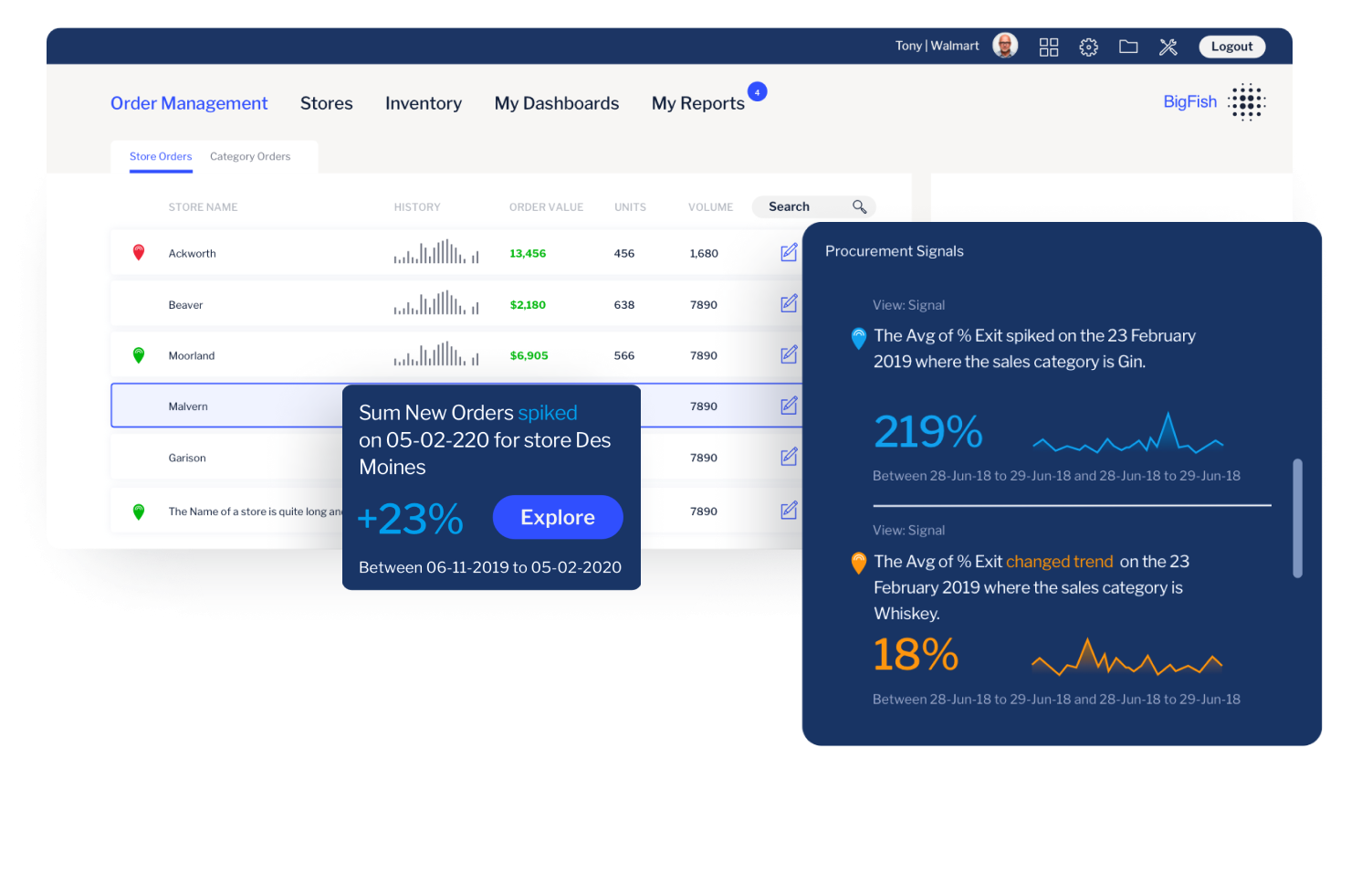
Business intelligence (BI) is a set of technologies that are used to solve specific business problems. BI tools are typically designed to deliver a mix of operational embedded analytics, analytics platform capabilities, and rich data visualization functionality.
They include reporting tools, statistical analysis tools, database management systems, and data mining applications. BI is usually implemented as a standalone technology in-house or by an outside consulting firm or vendor.
The business intelligence platform is mostly a cloud-based solution that is designed to help an organization to achieve and sustain the goals of its digital transformation initiatives. A business intelligence platform can be used to store, organize, and analyze data that allows organizations to access the insights they need in order to meet their business goals.
It can also be used as a tool for employees and stakeholders alike to gain insights into a company’s performance. A business BI platform is more than just an analytics tool.
In other words, you can use a business platform to enable collaboration between all parties in the organization as well as with external stakeholders such as customers, partners, suppliers and others.
What is the history and evolution of business intelligence (BI)?
BI solutions have been largely focused on acquiring a broad set of data and reporting it back to business analysts. However, there are some major shifts that have been made in BI over the last 20 years.
As a result, now we can take the advantages of modern BI tools. Business intelligence in this era is enabled for AI and machine learning. Furthermore, here's some development and evolution era of business intelligence.
Traditional era of business intelligence
The first era of business intelligence was started with the IT department as the controller of all enterprise data. They started to introduce a technique of combining data from multiple systems to a single database. Thus, they call the process as extract, transform, and load (ETL). Furthermore, the company could use the data to be analyzed. IT staff would do the queries on behalf of the clients.
After that, IT staff delivered a report to business owners. The process could take days or weeks, based on the skill of its staff. Also, the process was too long and inefficient for the clients.
Self-service era of business intelligence
After the computer development era, business intelligence systems were also developed faster. Business users are empowered to use BI tools to access the whole data. These tools allow business analysts to perform ad-hoc analysis from the data sources.
They enable data analysts to easily sort through large amounts of data to find patterns quickly. They substitute the rows and also columns that are part of traditional data presentation tools with pictures and charts that visually represent the data.
As a result, the transformation of business analysts from the old system of Extract, Transform, and Load (ETL) was very successful. This revolution accelerated the speed at which companies can analyze data. It will be possible for the company to make a faster decision. So, they can catch up and compete with the competitors.
It is as though modern BI is becoming an art and science at the same time. Key indicators become easier to see for employees, their stakeholders, and also the whole organization. It was logical that many BI vendors would start offering these latest data analysis and visualization abilities in their portfolios.
Similarly, data analysis and visualization platforms were quickly pushed by all users to provide enterprise-level data services and features. It includes the data management and protection, also the report capabilities.
Augmented analytics era of business intelligence
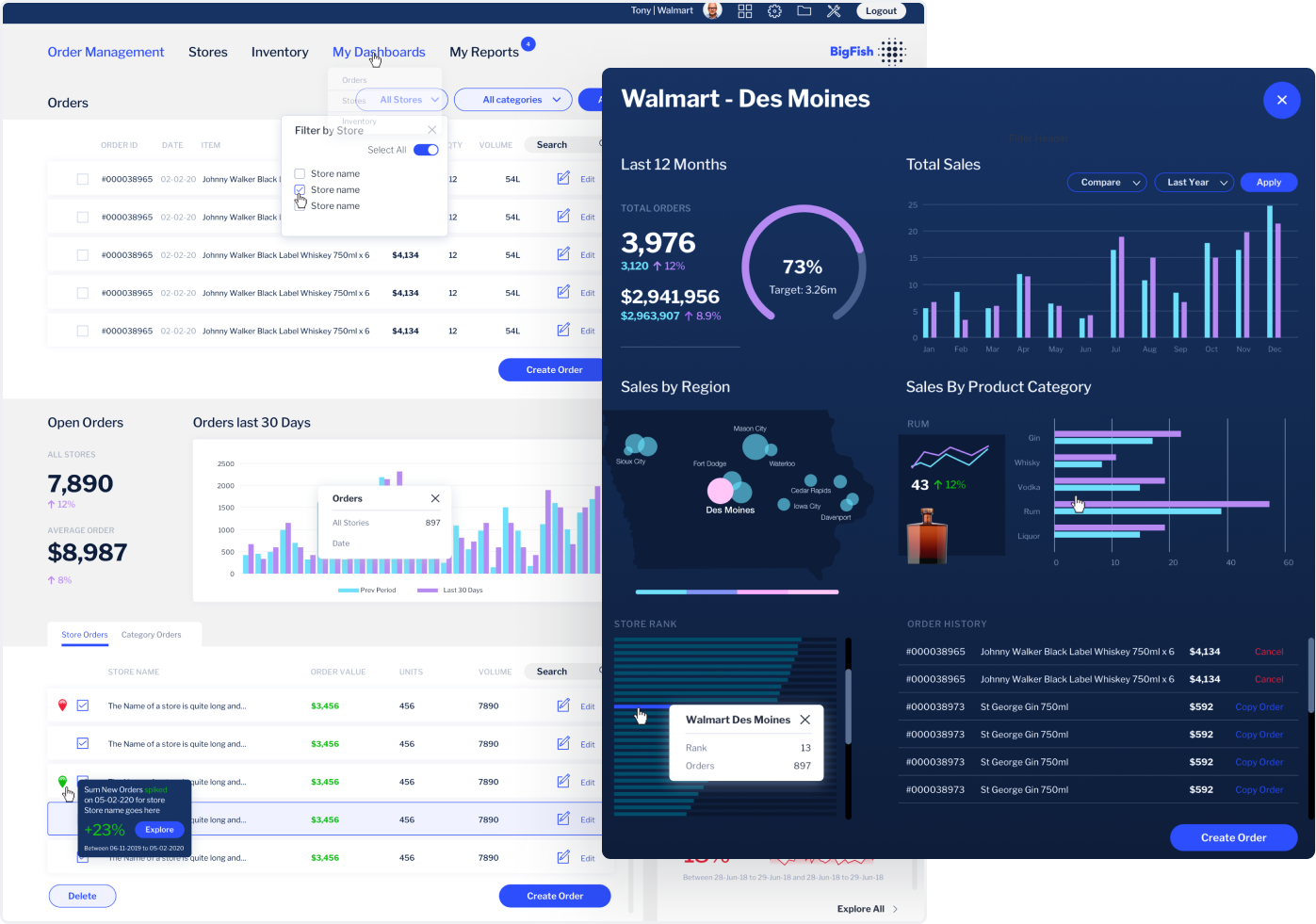
Nowadays, data scientists are responsible for turning massive amounts of data into insights that impact the business. This era is called the augmented analytics era.
We are moving away from self-service analytics and toward automation. So, this is what we call augmented analytics.
Latest BI systems are designed to help organizations generate insights that will allow them to improve their performance. Augmented analytics is possible to reduce the need for data scientists by automating the process of generating insights.
In addition, we are using machine learning and other advanced analytics techniques. Some popular business intelligence (BI) platforms also provide tools that allow organizations to automate the process of preparing big data sets. They also enable them to detect patterns and anomalies in the big data. Some BI platforms are able to perform analytics, and even generate insights.
What is the best BI platform to choose?
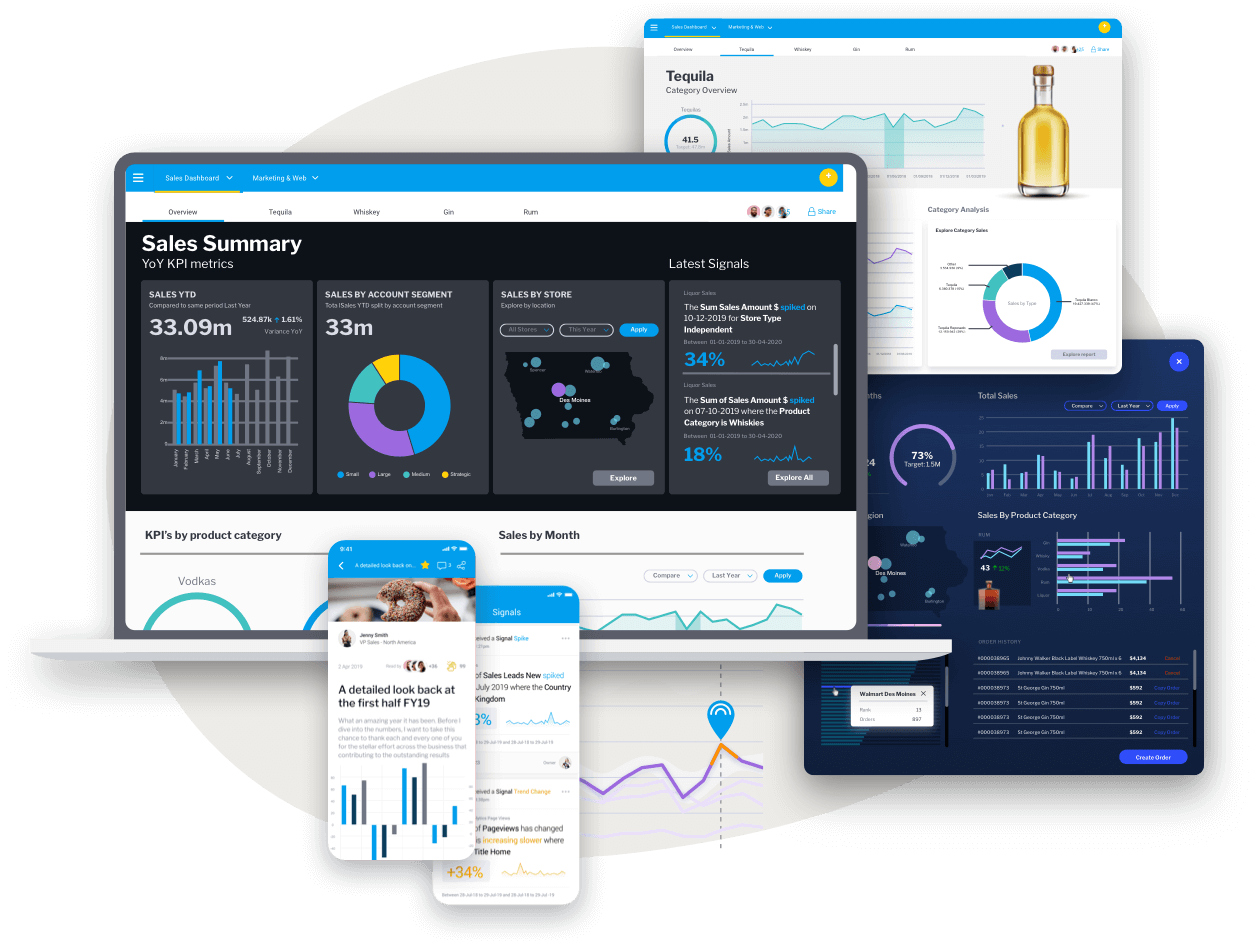
It is important to get the right tools and software to run your business. One of the growing business intelligence platforms nowadays is Yellowfin. Here's more information about Yellowfin.
What is Yellowfin business intelligence platform?
Yellowfins self-service BI tools allow anyone, from experienced data analysts to non-technical business users to analyze data easily. Use the latest report builder or guided Natural Language Query (NLQ) to easily ask questions from a variety of different types of data sources and get answers that you are looking for.
Yellowfin's NLQ makes it easy for any user to analyze the data. Combined with the insights, Yellowfin empowers all users to ask questions about their data.
Why choose Yellowfin as your business intelligence platform?
Yellowfin has a lot of technological advantages. Yellowfin has been able to leverage some great new technology to provide a very strong business intelligence platform. This platform has been built to integrate data from disparate sources and make it easy for the user to access, analyze and act on the data.
The company has taken a very modern approach to integrating data into BI platforms by providing real-time analysis, reporting and visualization of the data in various formats. It includes reports, dashboards and visualizations. In addition, these are the reasons why you have to choose Yellowfin as your business intelligence platform.
Minimal cost
As I mentioned above, Yellowfin's approach to BI is designed to help you do more with less. The result is that they have been able to keep their product very affordable. Many BI products are priced so high that they become out of reach for many small and medium sized businesses (SMBs).
The yellowfin platform is priced at a very reasonable price point, which means it's easy for SMBs to take advantage of the benefits offered by this product. And, since it has been built on top of Microsoft technologies, the costs associated with running the product are minimal.
Modernization
One of the things that makes Yellowfin stand out from other BI platforms is the fact that they have taken an active role in making sure that their product is as up-to-date as possible. This means that they are able to leverage modern technologies and add new features to their product at a much faster rate than most other BI vendors.
This is particularly important when you consider that they are focused on helping you do more with less, which means that you need to be able to take advantage of the latest technologies and features if you want to stay competitive. Yellowfin is committed to making sure their product is always cutting edge so that it can help you compete more effectively in your industry.
Support for the ongoing projects
This is a big plus because, if you're looking for a BI platform that will continue to grow with your business, then you want a vendor that is committed to providing support for your ongoing projects. Yellowfin has made sure that their product will be up-to-date with the latest technologies and can be adapted to meet your needs.
Price and licensing available
Yellowfin has price and licensing available for small and medium sized businesses. The Yellowfin platform is designed to be easy to use, so you don't need a lot of skills to get started. Yellowfin also offers its product in a fully managed version as well as a hosted service.
Simplicity and scalability
Yellowfin offers modern features like drill down data views, advanced dashboards and highly customizable dashboards, all of which are included in the price of the product. They also offer a lot of tools for creating interactive reports with a simple interface. More than that, the widgets and reports are very accessible. So, users can create powerful custom reports very quickly.
White-labeling and easy integration
They offer mobile access for accessing your data from anywhere via web browser or mobile device. You can read more about these modern features in our Yellowfin Technical Overview article on Modern Features in Yellowfin Business Intelligence Platform.
Start using a business intelligence platform today
Business intelligence platforms are essential tools for analysts and managers who need to make quick and accurate decisions. Their history and evolution provide a valuable perspective on how they work and how they can be used to improve your business.
At Yellowfin, we are passionate about helping our customers use BI platforms to their fullest potential. We also provide the best support possible so that you can get the most out of your BI platform.
You no longer have to sacrifice quality or efficiency when using a BI platform – Yellowfin has the perfect solution for you.
Try Yellowfin BI today!
Frequently Asked Questions About the Evolution of Business Intelligence (BI)
1. What is the origin of business intelligence (BI)?
The concept of Business Intelligence dates back to 1865, when Richard Millar Devens used the term “business intelligence” to describe how a banker gathered information ahead of competitors. However, BI as a technology began in the 1960s–1980s, when organizations started using computers for data storage, reporting, and decision-making. These early systems laid the foundation for today’s analytics platforms.
2. How has business intelligence evolved over time?
Business intelligence has evolved significantly over the years, moving through three major eras. Traditional BI in the 1990s and 2000s relied on IT-controlled reporting, long ETL processes, and slow insights. The 2010s introduced self-service BI, allowing business users to create reports, explore dashboards, and analyze data on their own. Today, in the era of augmented analytics, BI platforms include automation, natural language queries, machine learning, and AI-driven insights. This evolution has made business intelligence faster, more accessible, and far more intelligent.
3. What is the difference between traditional BI and modern BI?
Traditional BI relies heavily on IT-controlled reporting, slow manual ETL processes, and static reports that offer limited insights and are mostly used by analysts. Modern BI, however, introduces self-service dashboards, automated data preparation, and interactive visualizations that anyone in the organization can use. It also includes AI-driven insights and real-time data, allowing teams to make faster, more informed decisions.
4. Why did organizations shift from traditional BI to self-service BI?
Businesses shifted away from traditional BI because it was slow, expensive, and heavily dependent on IT teams. Self-service BI solved these issues by allowing users to access dashboards instantly, create their own reports, explore data freely, and make faster decisions without waiting for IT support. This transition significantly improved productivity and accelerated data-driven decision-making across organizations.
5. What is augmented analytics in BI?
Augmented analytics in BI uses AI, automation, and machine learning to simplify and accelerate data analysis. It automatically prepares data, detects patterns, highlights anomalies, and generates insights, even answering questions through natural language queries. By reducing the need for advanced technical skills, augmented analytics empowers everyone in an organization to understand and use data more easily.
6. What should businesses look for when choosing a BI platform?
When choosing a BI platform, businesses should look for ease of use that supports both technical and non-technical users, along with scalability to handle growing data needs. It’s important that the platform integrates well with existing tools and offers AI automation, smart insights, and interactive dashboards for better analysis. Affordable pricing and strong security are also key considerations. Selecting the right BI platform ensures long-term performance, efficiency, and reliable decision-making.
7. Why is Yellowfin considered a modern BI platform?
Yellowfin is considered a modern BI platform because it combines advanced analytics with simplicity. It offers natural language query capabilities, automated insights, real-time dashboards, and seamless integration with a wide range of data sources. The platform also supports white-label and embedded analytics and features an affordable, scalable architecture. These strengths make Yellowfin an excellent choice for both small businesses and large enterprises.
8. Is Yellowfin a good BI solution for non-technical users?
Yes. Yellowfin is designed for everyone, not just data analysts. Features like NLQ, guided insights, drag-and-drop dashboards, and automated reports make it easy for non-technical users to analyze data without relying on IT teams. This improves collaboration and speeds up decision-making.
9. How much does Yellowfin BI usually cost?
Yellowfin BI is generally known for being more cost-effective than many other BI platforms. Its pricing varies based on factors like the number of users, the type of deployment—whether cloud or on-premise—and the specific features required. Overall, Yellowfin is designed to be affordable for small and medium-sized businesses while still offering robust, enterprise-level capabilities.
10. What is the future of business intelligence?
The future of business intelligence is centered around AI-powered insights, automated data preparation and reporting, natural language analytics, and more advanced predictive and prescriptive capabilities. BI is rapidly evolving to support real-time decision-making and is moving toward a fully automated and intelligent ecosystem that will be accessible to every employee, regardless of technical skill.
Get the best BI solution for today's needs
The Yellowfin analytics platform is known for its ease of use, on top of providing ongoing support and scalability for any company. If you want to optimize your business, start with Yellowfin.