
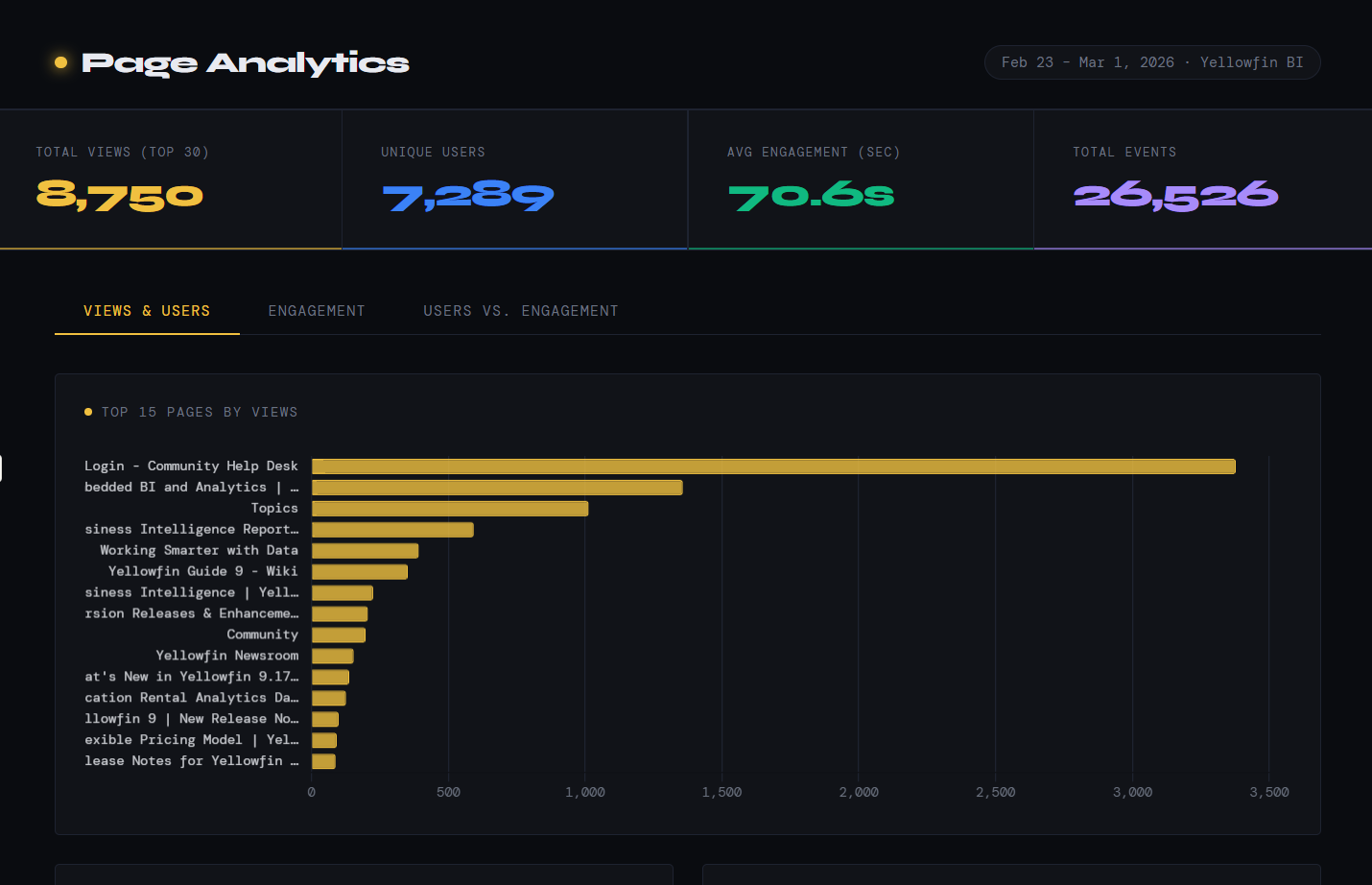
Is AI dashboard a dead end? Here's what a real analytics platform actually does
Blog Contents
show
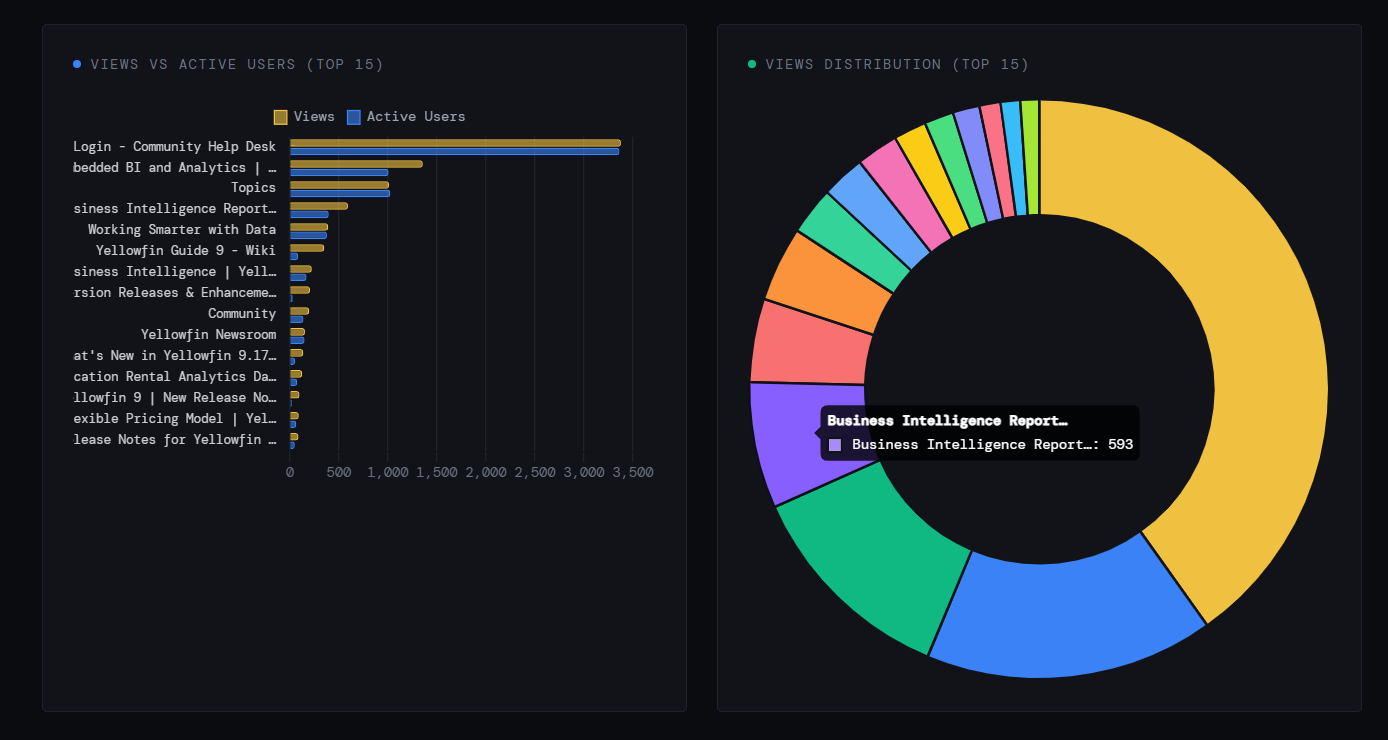
The barrier to getting something on screen has collapsed. So the question is not whether LLMs can build dashboards (they can), but whether that is the hard part of analytics. It is not, and it never was.
What exactly is a dashboard?
A dashboard is the final step in our data analysis. It is the last important link in a chain that includes connecting to live data sources, modeling that data correctly, defining metrics consistently, applying role-based security so the right people see the right numbers (and the wrong people don’t), and setting up refresh schedules so the numbers stay current. The dashboard is why we are analysing our data. It makes the complicated understandable, ideally at a glance. Claude can generate a beautiful chart from a spreadsheet you paste into it. But AI solutions like Claude cannot connect to your live data, enforce row-level security, or monitor the changes in your data and alert you when there is a significant event without an awful lot of error-prone - and very fragile work. That distinction matters enormously. The chart is visible. All the infrastructure underneath it is intangible or at best opaque, and this is where most analytics projects actually succeed or fail. What Yellowfin Present and Stories do The comparison with an LLM sharpens when you look at Yellowfin's Present and Stories features, because these are the capabilities that at first look seem superficially similar to what a generative AI can potentially produce. Yellowfin Present allows any business user (not just analysts) to build management reports and presentations using a familiar set of graphic and editing tools, with data that is dynamically refreshed so it is always accurate and up to date. It doesn’t require those users to be experts at ‘prompting’ an AI in the right way to finally get to an acceptable result. It is designed with humans in mind, producing actionable results with assistance in a way that you can understand.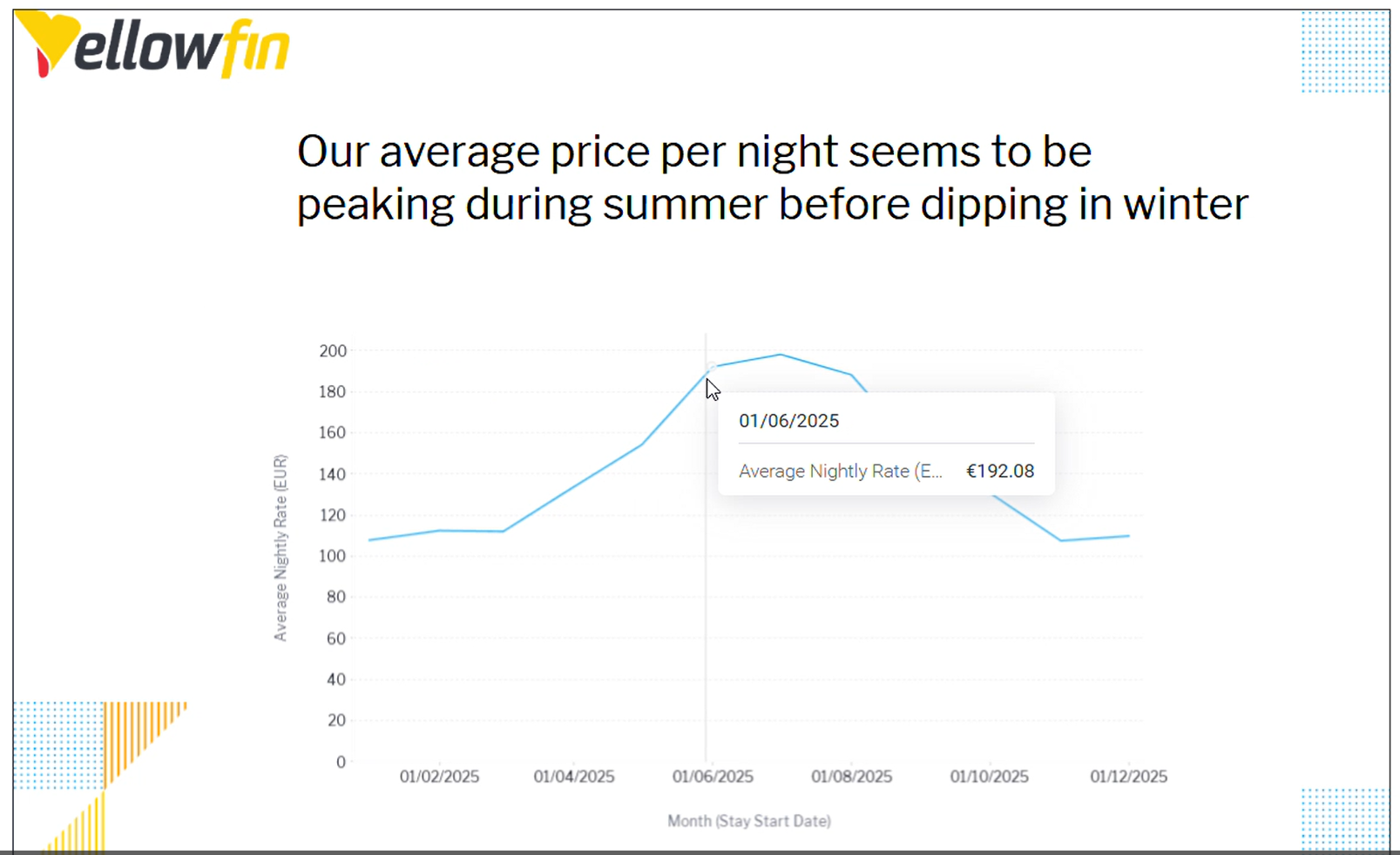 When you present your results in the future, the charts show the most up-to-date numbers automatically. Nothing stale, no need to say “oh, this is a little out of date now”. This is unlike a slide deck generated by an AI model like Claude which is, at best, a snapshot of whatever data you pasted in at the time you asked the question.
Every time you want to update that frozen window of time, external AI will need to recreate the chart and consume ‘tokens’. And because LLMs are not ‘deterministic’ the chart will not necessarily be the same each time because the LLM AI essentially repeats that whole task from scratch every time you ask it. Yellowfin Present doesn’t make you do all the work again - it’s ready, when you are, without any drama.
Yellowfin Stories enables the creation of long-form narratives augmented with rich data content (charts, reports, text, images, video) with report content added either as a live view of the data, a snapshot preserving the data at a specific point in time, or a bookmark with pre-defined filters. It brings your underlying data to life as a story - a report, a blog post, a newsletter, a rich illustration of the truth using words and illustrations.
When you present your results in the future, the charts show the most up-to-date numbers automatically. Nothing stale, no need to say “oh, this is a little out of date now”. This is unlike a slide deck generated by an AI model like Claude which is, at best, a snapshot of whatever data you pasted in at the time you asked the question.
Every time you want to update that frozen window of time, external AI will need to recreate the chart and consume ‘tokens’. And because LLMs are not ‘deterministic’ the chart will not necessarily be the same each time because the LLM AI essentially repeats that whole task from scratch every time you ask it. Yellowfin Present doesn’t make you do all the work again - it’s ready, when you are, without any drama.
Yellowfin Stories enables the creation of long-form narratives augmented with rich data content (charts, reports, text, images, video) with report content added either as a live view of the data, a snapshot preserving the data at a specific point in time, or a bookmark with pre-defined filters. It brings your underlying data to life as a story - a report, a blog post, a newsletter, a rich illustration of the truth using words and illustrations.
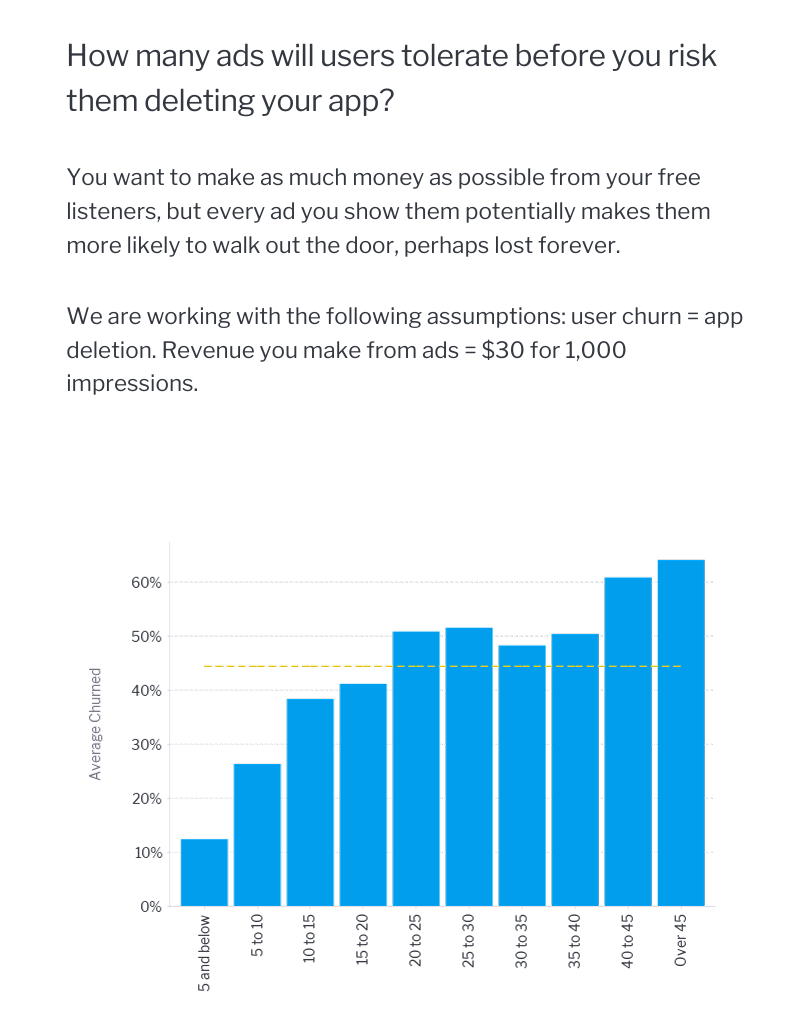 The Yellowfin Stories feature allows analysts and business users to combine the numbers with the explanation, the trend with the context, the what with the why, and to do so in a format that non-technical readers can truly absorb.
That output is not confined to just one person’s point of view. Multiple users can collaborate on a single Story, with all contributors and reviewers acknowledged in the story credits, adding transparency, credibility, and trust to the final product. A team can present their collective view of where things stand.
An LLM can write a narrative around data. It cannot build one where multiple named contributors have reviewed and signed off, where the underlying charts are live rather than static, and where the whole thing sits inside your organization's access control system. Yellowfin doesn’t suffer from ‘AI hallucinations’ either. From Yellowfin the facts are.. facts, not something dreamed up by an AI LLM’s best guess at what you want to hear.
The Yellowfin Stories feature allows analysts and business users to combine the numbers with the explanation, the trend with the context, the what with the why, and to do so in a format that non-technical readers can truly absorb.
That output is not confined to just one person’s point of view. Multiple users can collaborate on a single Story, with all contributors and reviewers acknowledged in the story credits, adding transparency, credibility, and trust to the final product. A team can present their collective view of where things stand.
An LLM can write a narrative around data. It cannot build one where multiple named contributors have reviewed and signed off, where the underlying charts are live rather than static, and where the whole thing sits inside your organization's access control system. Yellowfin doesn’t suffer from ‘AI hallucinations’ either. From Yellowfin the facts are.. facts, not something dreamed up by an AI LLM’s best guess at what you want to hear.