Unlocking Intelligence: How AI-Assisted Insights Transform Embedded Analytics
Blog Contents
show
The Growing Demand for Intelligent Embedded Analytics
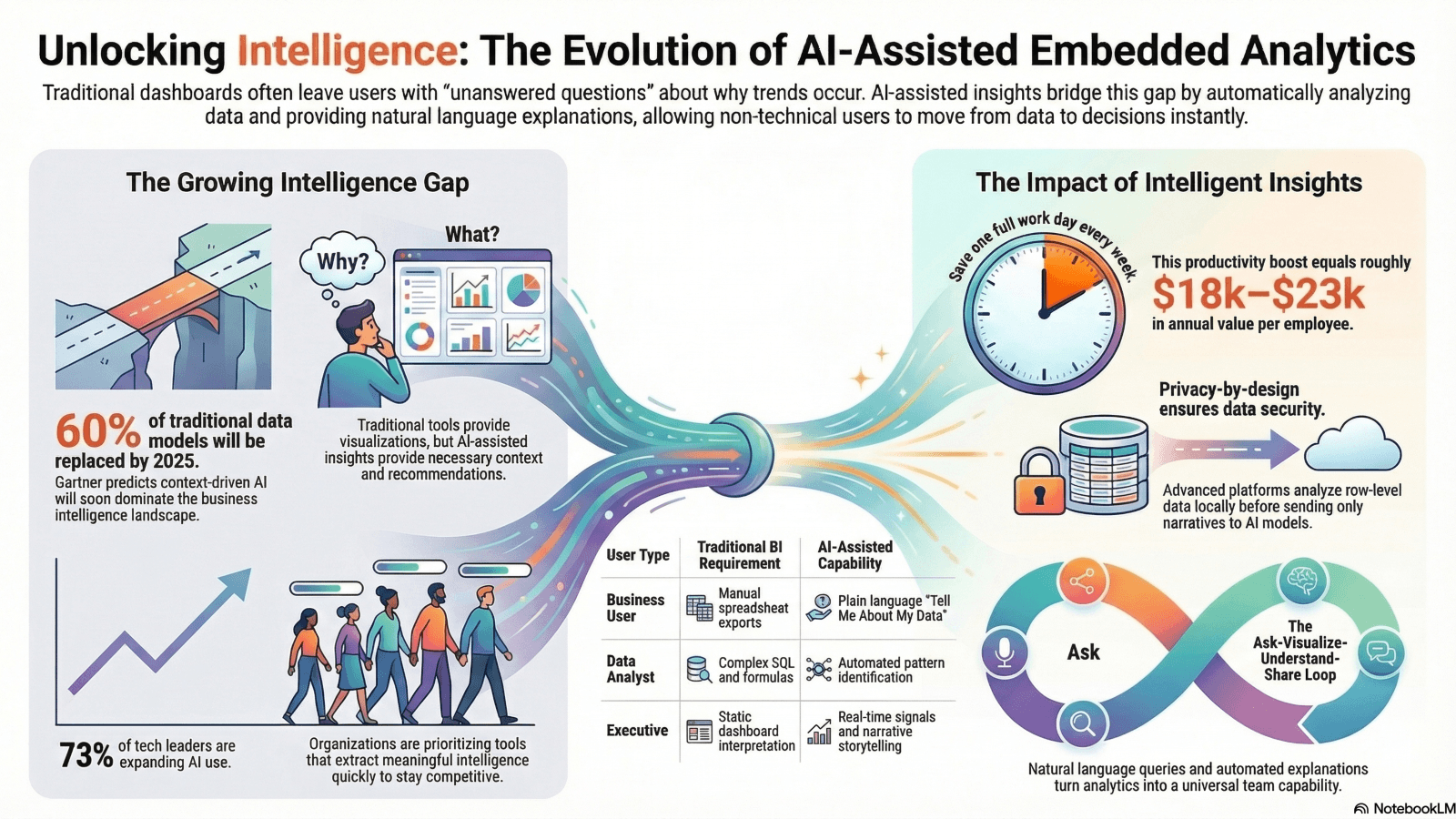
The numbers tell a compelling story. The embedded analytics market is expected to reach $55.54 billion by 2030, reflecting how deeply integrated these tools have become in business applications. More telling is that 73% of tech leaders are planning to expand the use of AI within their organizations in the next year. This surge isn't happening in a vacuum. Business users seem tired of staring at dashboards without understanding the story behind the data. They need context, interpretation, and recommendations—not just visualizations. Traditional analytics tools can leave users with unanswered questions after viewing their reports. AI-assisted insights help answer that question automatically. By 2025, context-driven analytics and AI models will replace 60% of existing models built on traditional data, according to research from Gartner. This transformation reflects a fundamental shift in how people interact with business intelligence tools.What Makes AI-Assisted Insights Different?
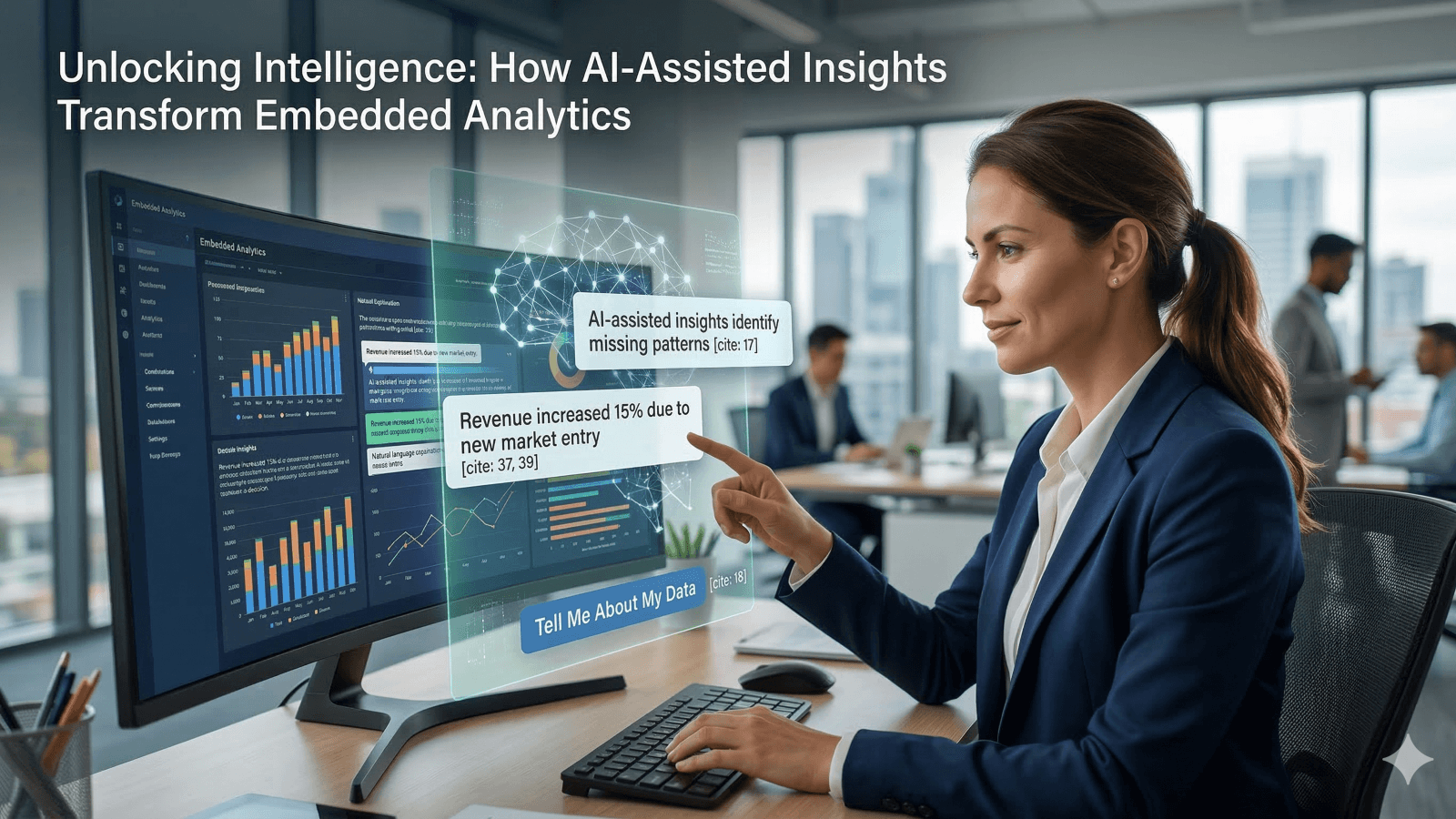
AI-assisted insights go beyond basic automation. They actively analyze your data, identify patterns you might miss, and present their findings in clear, natural language that anyone can understand—regardless of their technical background. Yellowfin's Assisted Insights feature exemplifies this approach. When you're viewing a dashboard or report, you can click a single button to access the "Tell Me About My Data" function. The system automatically processes and analyzes selected data to deliver helpful commentary using clear, natural language explanations and recommended, ready-to-use charts to illustrate its findings. What sets advanced platforms apart is how they handle data security while delivering these insights. Yellowfin's built-in machine learning algorithms first analyze data locally, meaning detailed, row-level data is never transmitted to an external AI model. Only after the initial analysis are insights sent to the AI model for narrative creation. This architecture addresses one of the biggest concerns around AI in analytics: data privacy.